Description
Structural strengthening using prestressed carbon-fibre plates
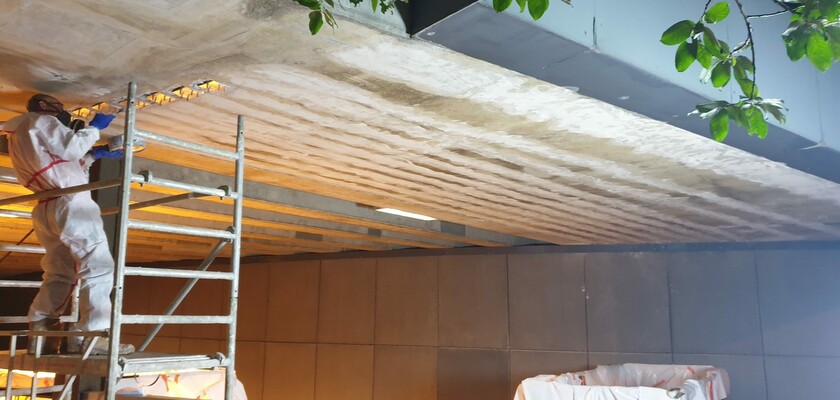
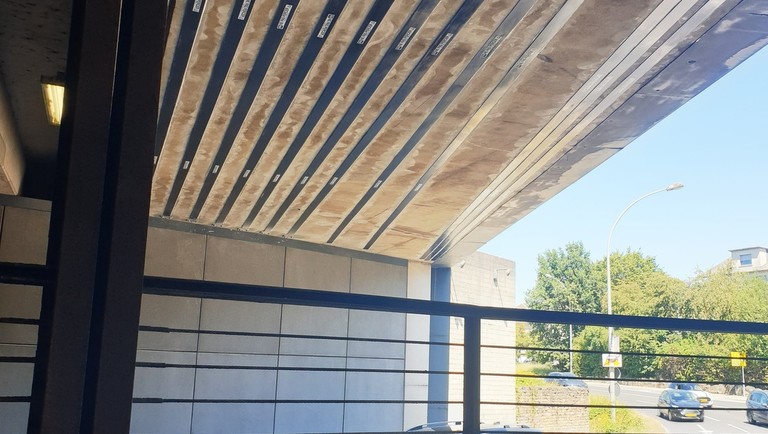
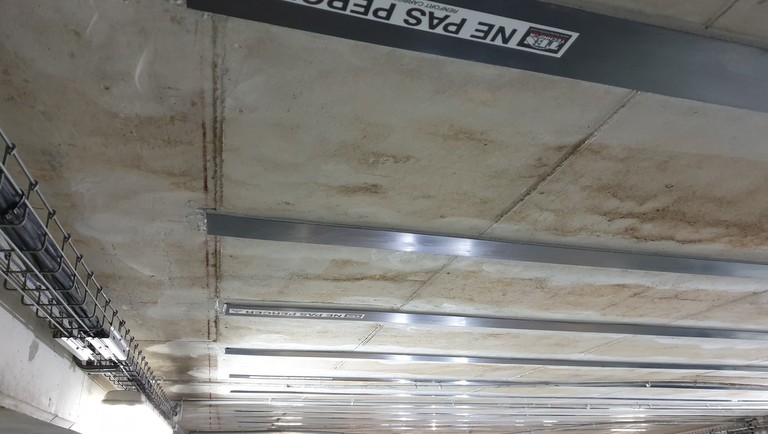
Strengthening with prestressed carbon-fibre plates is an active strengthening technique for existing structures.
Unlike a simply bonded carbon-fibre plate, the plate is tensioned before being permanently anchored to the structure. The prestressing force introduced in this way generates an effect opposite to that produced by the permanent and imposed loads acting on the structure.
This action enables the strengthening system to become effective immediately and helps relieve the existing reinforcement. It can also help limit deflections and crack opening.
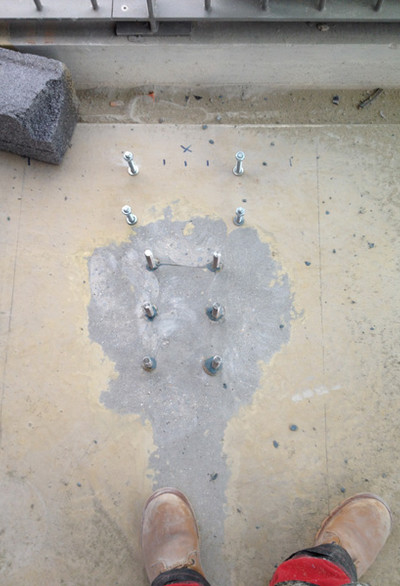
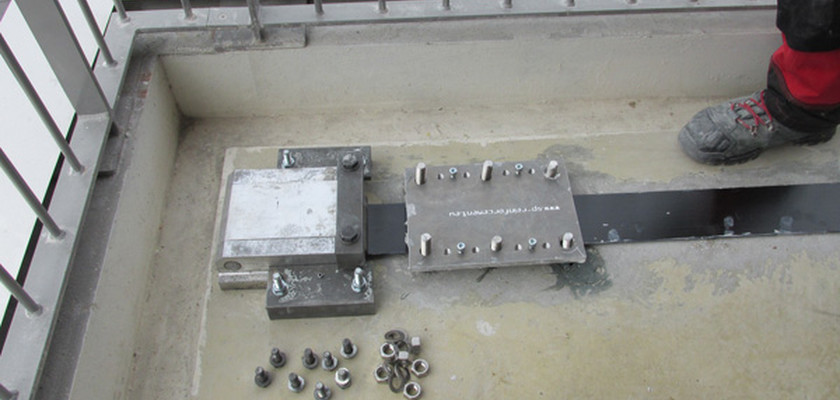
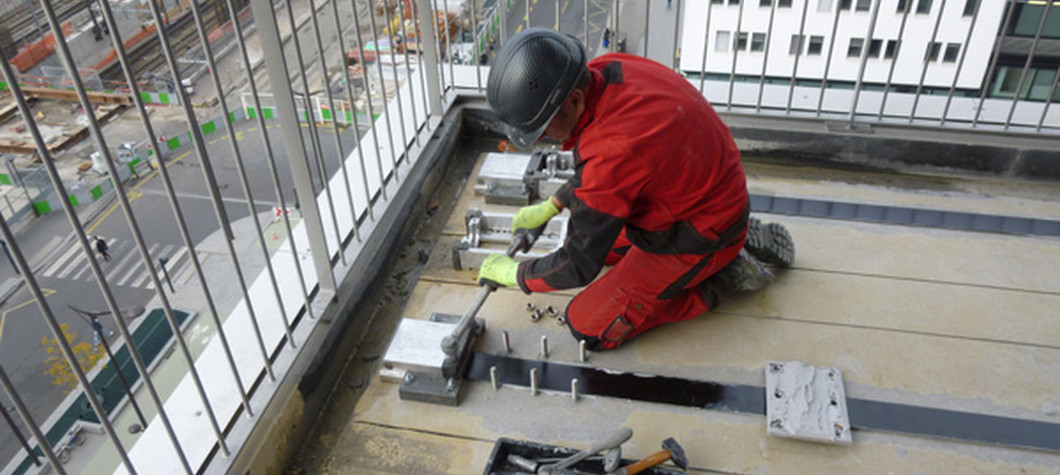
The prestressing force is transferred to the structure through specially designed anchorage systems. The design of the anchorage zones and the transfer of forces are therefore essential elements of the strengthening system.
How does strengthening with prestressed carbon-fibre plates work?
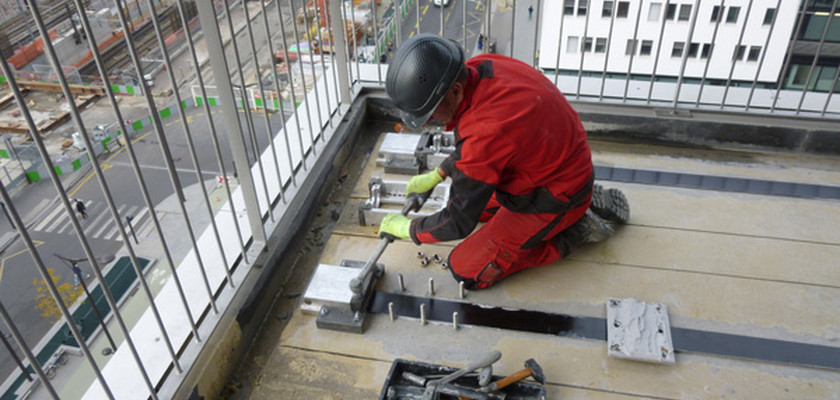
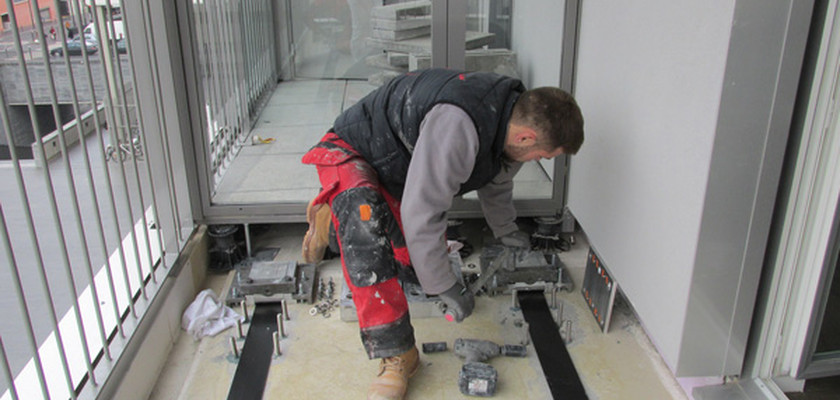
The carbon-fibre plate is tensioned using a prestressing system and then mechanically anchored to the structure.
Tensioning the plate creates a bending moment opposite to that generated by the loads acting on the structure.
Once the prestressing force has been transferred to the structure, the strengthening system immediately modifies its state of stress. It can therefore help reduce stresses in the existing reinforcement, control deflections and limit crack opening.
Carbon fibre also offers very high mechanical strength combined with particularly low weight and minimal thickness, making it highly suitable for strengthening existing structures.
Why prestress carbon-fibre plates?
A simply bonded carbon-fibre plate essentially acts as passive strengthening: it begins to carry additional load when the structure undergoes further deformation after the strengthening has been installed.
This characteristic can become a limitation when the existing structure is already significantly stressed under the loads present at the time of the strengthening works.
The existing reinforcement may already be subject to high tensile stresses, while the concrete may already be subject to significant compressive stresses. In certain configurations, the remaining capacity to effectively mobilise passive strengthening may therefore be insufficient.
Post-tensioning provides a different response: the carbon-fibre plate is tensioned and deliberately transfers a force to the existing structure.
This action immediately modifies the state of stress in the strengthened element, without having to wait for additional loads to be applied.
A major advantage when the structure is already carrying load
This is one of the principal advantages of prestressed carbon-fibre strengthening: it can be applied to a structure that is already reasonably loaded and stressed, subject to verification of its initial condition and appropriate structural design.
When a structure is already highly stressed, the use of passive carbon-fibre strengthening may become difficult. Since passive strengthening is only mobilised by deformation occurring after its installation, it cannot directly modify the state of stress already present within the structure.
External post-tensioning, on the other hand, makes it possible to introduce a mechanical action into the structure at the time the strengthening is installed.
It can therefore help relieve the existing structure before additional loads are applied and restore sufficient structural capacity to accommodate increased loading.
This characteristic makes prestressing particularly valuable for certain projects involving increased load-bearing capacity, structural alterations or changes in building use.
What are the advantages of prestressed carbon-fibre plates?
Depending on the configuration of the structure and the design objectives, this technique can:
-
increase the load-bearing capacity of the strengthened element;
-
relieve the existing reinforcement;
-
modify the state of stress in a structure that is already carrying load;
-
limit deflections;
-
reduce or control crack opening;
-
improve the serviceability performance of the structure;
-
strengthen a structure with very little additional weight;
-
maintain a very low-profile strengthening system.
When should prestressed carbon-fibre plates be used?
This technique is particularly suitable for the rehabilitation, alteration or increase in load-bearing capacity of existing structures.
It can notably be considered for:
-
strengthening reinforced-concrete slabs;
-
strengthening beams;
-
strengthening existing floors;
-
increasing imposed loads;
-
changes in building use;
-
alterations to existing structures;
-
strengthening civil engineering structures;
-
projects requiring a lightweight, low-profile strengthening solution.
The small thickness of carbon-fibre plates is particularly advantageous where architectural, technical or operational constraints limit the possibility of installing bulkier strengthening systems.
Assessment and design of the strengthening system
The implementation of external prestressing requires a precise understanding of the existing structure, its state of stress and the forces to be resisted.
TES TECHNIFOR can become involved from the design stage to analyse the structure and define an appropriate strengthening solution.
Depending on the project, investigations may include structural surveys, reinforcement detection, exploratory investigations, core drilling and material characterisation.
The structural design then determines the arrangement of the plates, the required prestressing force and the anchorage systems according to the behaviour of the structure and the required performance.
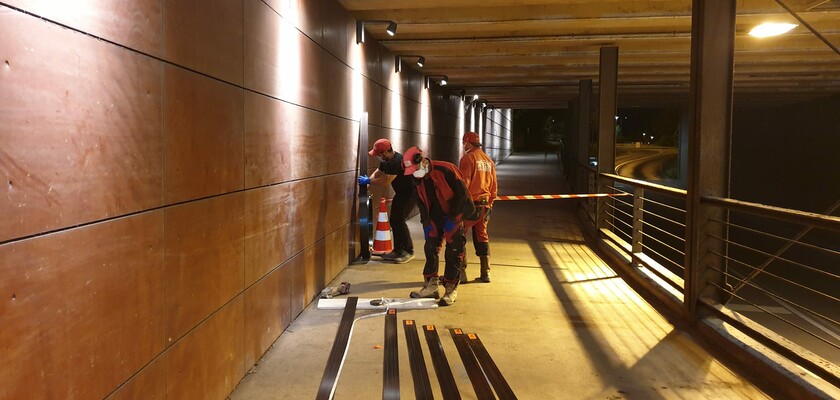
Installation of prestressed carbon-fibre plates
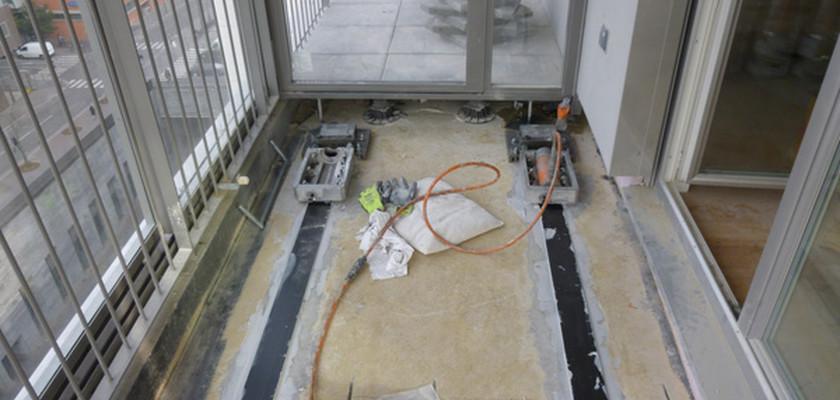
The strengthening works comprise several stages, depending on the system selected and the existing structure:
-
structural assessment and investigation;
-
verification of the initial condition and design of the strengthening system;
-
preparation of the substrate;
-
installation of the anchorage systems;
-
positioning of the carbon-fibre plates;
-
controlled tensioning of the plates;
-
transfer of the prestressing force to the structure;
-
application of any required protection and finishes.
The quality of the substrate preparation, anchorage systems, tensioning operations and force transfer directly affects the performance of the strengthening system.
A solution particularly suited to existing structures
Prestressed carbon-fibre plates make it possible to strengthen a structure with very little alteration to its geometry.
Their low weight and minimal thickness are particularly advantageous in existing buildings where the addition of substantial steel structures or increases in concrete section sizes would be difficult to implement.
TES TECHNIFOR works on a wide range of structures, including:
-
industrial buildings;
-
commercial and office buildings;
-
residential buildings and condominiums;
-
car parks;
-
public-access buildings;
-
civil engineering structures;
-
structures requiring work in constrained environments.
Comprehensive expertise in structural strengthening
One of TES TECHNIFOR's key strengths lies in the complementary nature of its specialist activities.
Our expertise in structural assessment, structural analysis and design, concrete sawing and core drilling, carbon-fibre strengthening, steel strengthening and specialist construction works enables us to take a comprehensive approach to the alteration and strengthening of existing structures.
Depending on the constraints of the structure, different solutions can therefore be considered: bonded carbon-fibre plates, carbon-fibre fabrics, prestressed carbon-fibre plates, steel strengthening or other structural strengthening techniques.
TES TECHNIFOR operates throughout the Grand Est region of France, particularly in Nancy, Metz, Reims, Strasbourg and Colmar, as well as on specialist projects throughout north-eastern France.
Do you have a prestressed carbon-fibre strengthening project?
Increased loading, strengthening of a slab or beam, alteration of a building, or strengthening of an already stressed structure: